
This content was translated by an AI-powered translation tool.
It may contain inaccuracies due to the limitations of machine translation.
Copyright © DongA Science. All rights reserved.
Study in Science warns today’s fragmented herds of 530,000 American bison risk renewed extinction as genetic diversity declines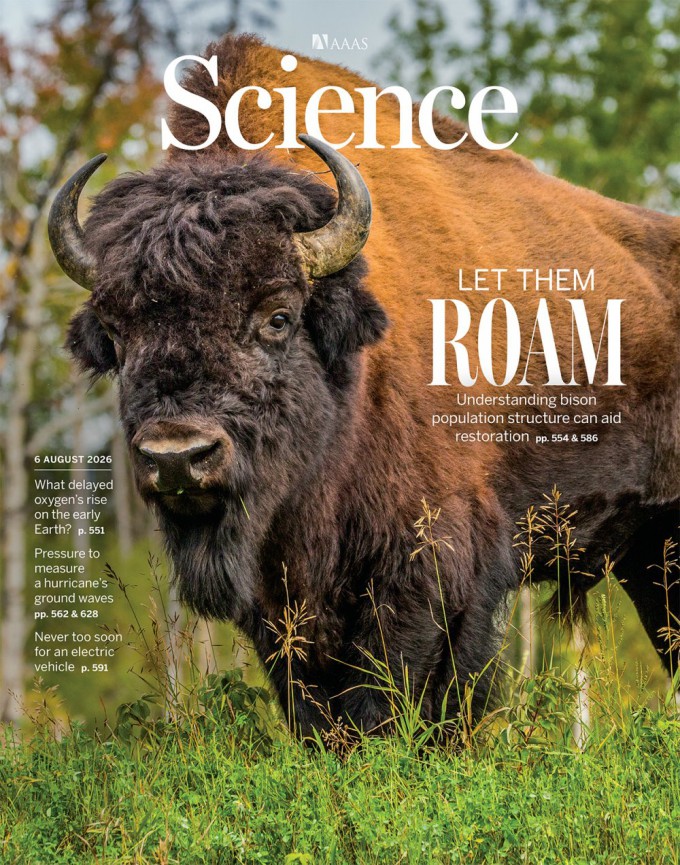
This week’s cover of the international journal 'Science' features North American bison driven to the brink of extinction by unregulated hunting in the 19th century. Weighing up to 900 kg and standing more than 2 meters tall, American bison once numbered about 50 million across the North American continent a thousand years ago, but large-scale hunting by European settlers reduced their population to just 500 animals.
A new study finds that North American bison, which once faced extinction, have retained more genetic diversity than expected. Paradoxically, researchers warn that today’s herds, now fragmented and isolated in different regions, may be heading back toward an extinction risk as their genetic diversity erodes.
A research team in ecology and evolutionary biology at the University of California, Berkeley compared and analyzed ancient and modern genomes of North American bison to track changes in population size and genetic diversity. Their results were published August 6 (local time) in the international journal 'Science'.
North American bison trace back to ancestors that migrated from Siberia to Alaska across the Bering Land Bridge about 200,000 years ago. At one time, roughly 50 million bison roamed across North America, but large-scale hunting by European-descended settlers in the 19th century caused their numbers to plummet. By 1890, only about 500 wild individuals remained. Thanks to sustained conservation efforts, there are now about 530,000 bison in North America, including managed and ranched animals.
The team analyzed whole genomes from 160 bison specimens held in museums, universities, and private collections and compared them with existing genomic data from 52 additional animals. The oldest specimens date back about 50,000 years.
The analysis showed that over the past 10,000 years, bison living across the North American continent differed very little genetically. Movement and interbreeding among herds separated by long distances enabled extensive gene flow across North America. “Based on the genetic makeup of ancient bison alone, it is difficult to distinguish which region an individual came from,” the researchers explained.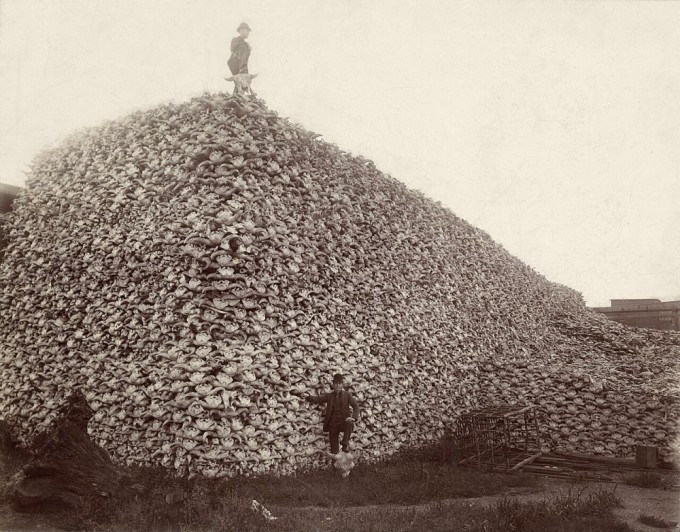
This extensive gene flow played a decisive role in helping bison retain genetic diversity when their numbers crashed in the 19th century. When the team compared genetic diversity before and after the population bottleneck, the two groups showed almost the same levels. That is because the roughly 500 bison that survived near extinction still carried a substantial portion of the species’ genetic variation.
The researchers warn that today’s bison may actually face a higher risk of extinction. Modern bison live in small, separated herds in national parks and reserves. Because they can no longer freely exchange genes as they once did, local populations have begun to develop distinct genetic signatures.
The more a population is isolated within a small group, the higher the risk of inbreeding and the greater the loss of genetic diversity. This can weaken their ability to cope with disease or environmental change.
Greg Adams, a professor at the Western College of Veterinary Medicine at the University of Saskatchewan in Canada, who founded the 'Bison Integrated Genomics (BIG)' project in 2022 and retired this year, expressed concern: “To maintain a safe level of genetic diversity, you need at least 1,000 animals in a single herd, but very few wild herds currently reach that size.”
The research team is working on collecting sperm and eggs from wild bison to store as genetic resources and to use in vitro fertilization and other reproductive technologies to deliberately move genes between distant herds.
Jaswant Singh, associate dean at the University of Saskatchewan’s Western College of Veterinary Medicine, said, “If bison populations remain as isolated as they are now, we will see catastrophic consequences in 100 to 200 years.”
<Reference>
doi.org/10.1126/science.aee4205